Questions
12345678910
Reading 2/2:
D. avulung canying devices and weanny expensive jewelry
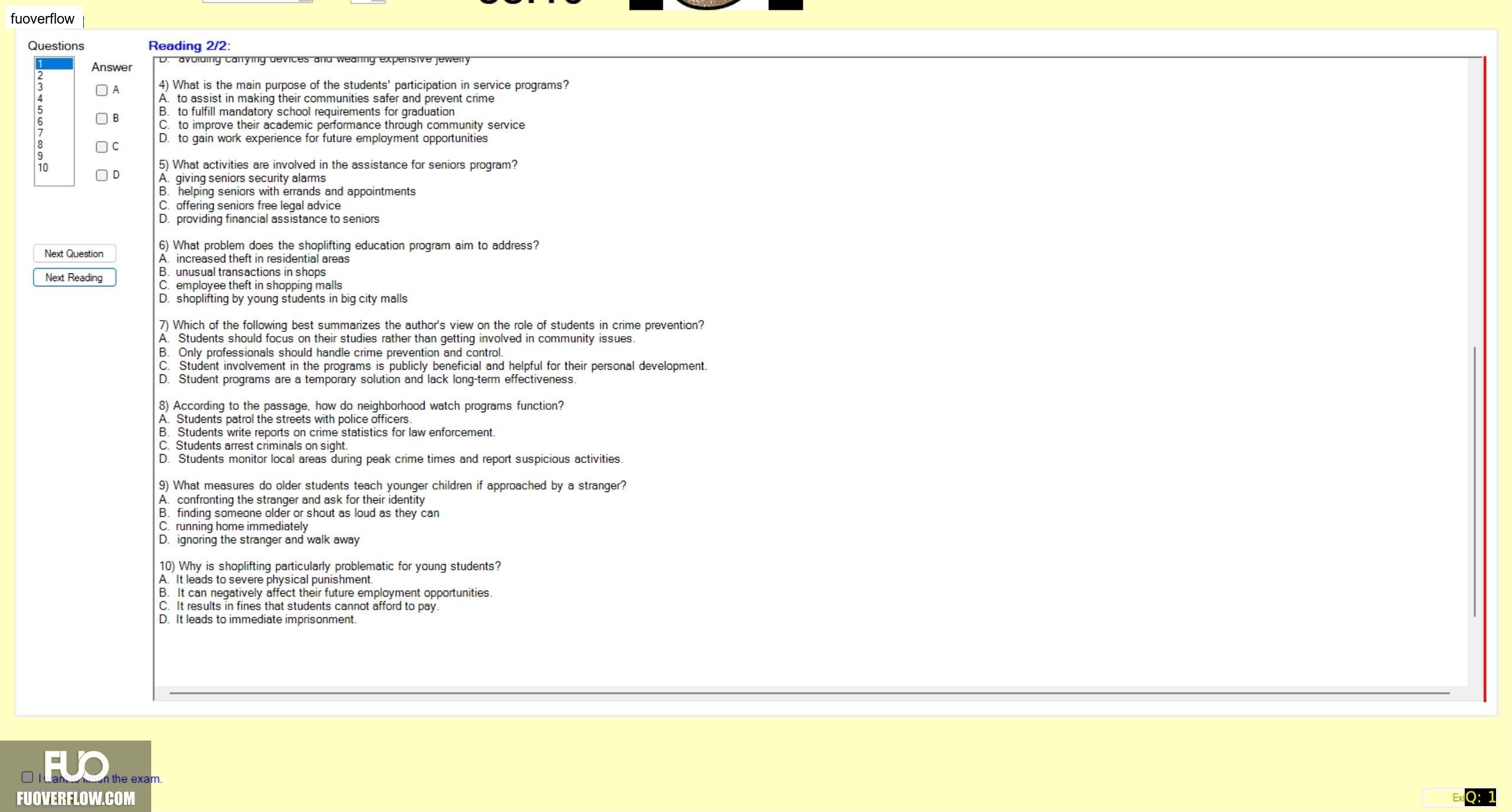
4) What is the main purpose of the students' participation in service programs?
A. to assist in making their communities safer and prevent crime
B. to fulfill mandatory school requirements for graduation
C. to improve their academic performance through community service D. to gain work experience for future employment opportunities
5ABCD
A. giving seniors security alarms
5) What activities are involved in the assistance for seniors program?
helping seniors with errands and appointments
offering seniors free legal advice
Next Question
providing financial assistance to seniors
6) What problem does the shoplifting education program aim to address?
ABCD
increased theft in residential areas
Next Reading
shoplifting by young students in big city malls
unusual transactions in shops employee theft in shopping malls
Which of the following best summarizes the author's view on the role of students in crime prevention?Students should focus on their studies rather than getting involved in community issues.
ABCD D. Student programs are a temporary solution and lack long-term effectiveness.
B. Only professionals should handle crime prevention and control.Student involvement in the programs is publicly beneficial and helpful for their personal development.
8) According to the passage, how do neighborhood watch programs function?
A. Students patrol the streets with police officers.B. Students write reports on crime statistics for law enforcement.
C. Students arrest criminals on sight.
D. Students monitor local areas during peak crime times and report suspicious activities.
9) What measures do older students teach younger children if approached by a stranger?
A. confronting the stranger and ask for their identity
B. finding someone older or shout as loud as they can
C. running home immediately
D. ignoring the stranger and walk away
10) Why is shoplifting particularly problematic for young students?
A. It leads to severe physical punishment.
B. It can negatively affect their future employment opportunities.
C. It results in fines that students cannot afford to pay.
D. It leads to immediate imprisonment.
on the exam.