Reading
Questions
Reading 1/3:
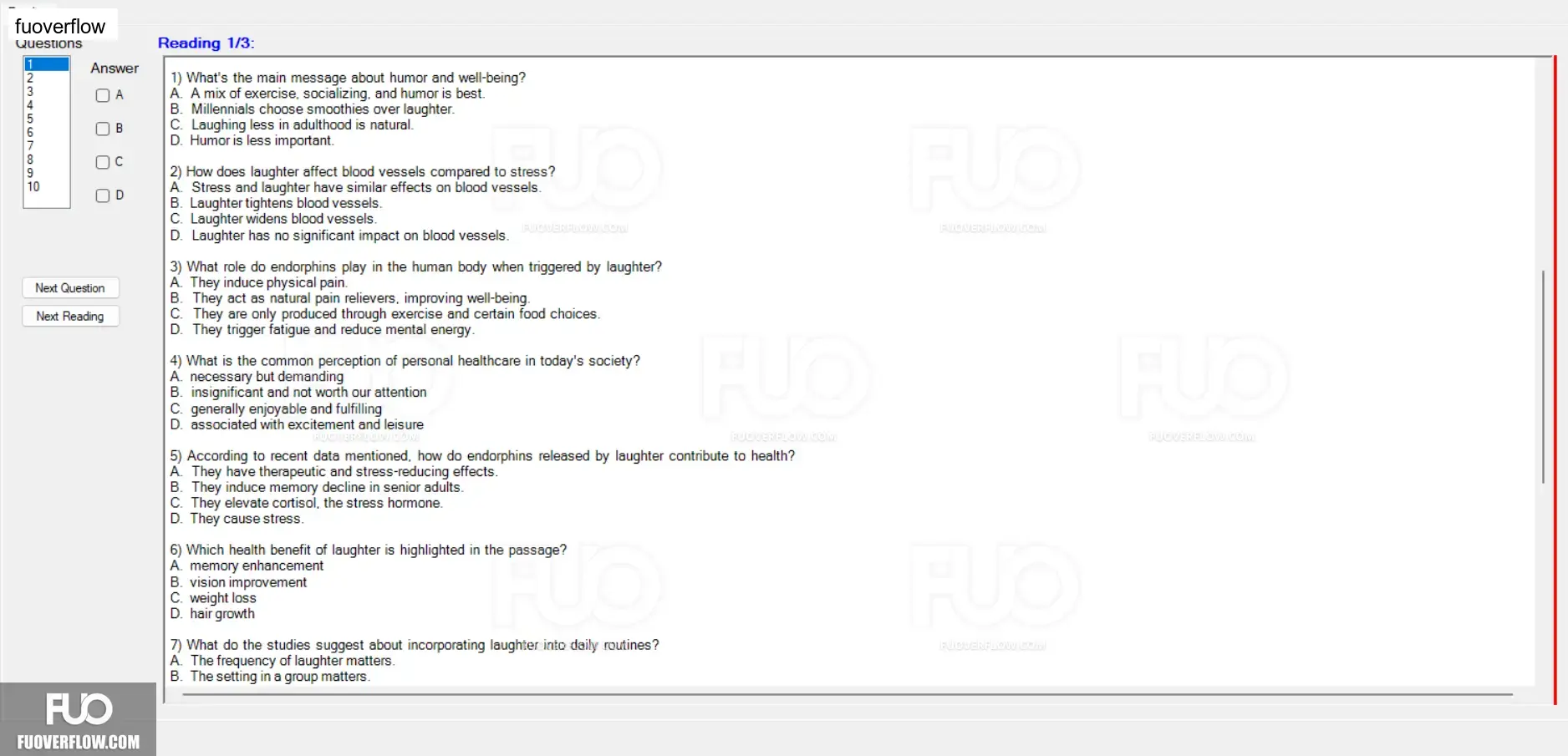
1) What's the main message about humor and well-being?
123456789101
A. A mix of exercise, socializing, and humor is best.
B. Millennials choose smoothies over laughter.
C. Laughing less in adulthood is natural.
D. Humor is less important.
2) How does laughter affect blood vessels compared to stress?
A. Stress and laughter have similar effects on blood vessels.
B. Laughter tightens blood vessels.
C. Laughter widens blood vessels.
D. Laughter has no significant impact on blood vessels.
3) What role do endorphins play in the human body when triggered by laughter?
Next Question
A. They induce physical pain.
. They act as natural pain relievers, improving well-being.
Next Reading
C. They are only produced through exercise and certain food choices.
D. They trigger fatigue and reduce mental energy.
4) What is the common perception of personal healthcare in today's society?
A. necessary but demanding
B. insignificant and not worth our attention
C. generally enjoyable and fulfilling
D. associated with excitement and leisure
5) According to recent data mentioned, how do endorphins released by laughter contribute to health?
A. They have therapeutic and stress-reducing effects.
B. They induce memory decline in senior adults.
C. They elevate cortisol, the stress hormone.
D. They cause stress.
6) Which health benefit of laughter is highlighted in the passage?
A. memory enhancement
B. vision improvement
C. weight loss
D. hair growth
7) What do the studies suggest about incorporating laughter into daily routines?
A. The frequency of laughter matters.B. The setting in a group matters.