(Choose 1 answer)
✔A
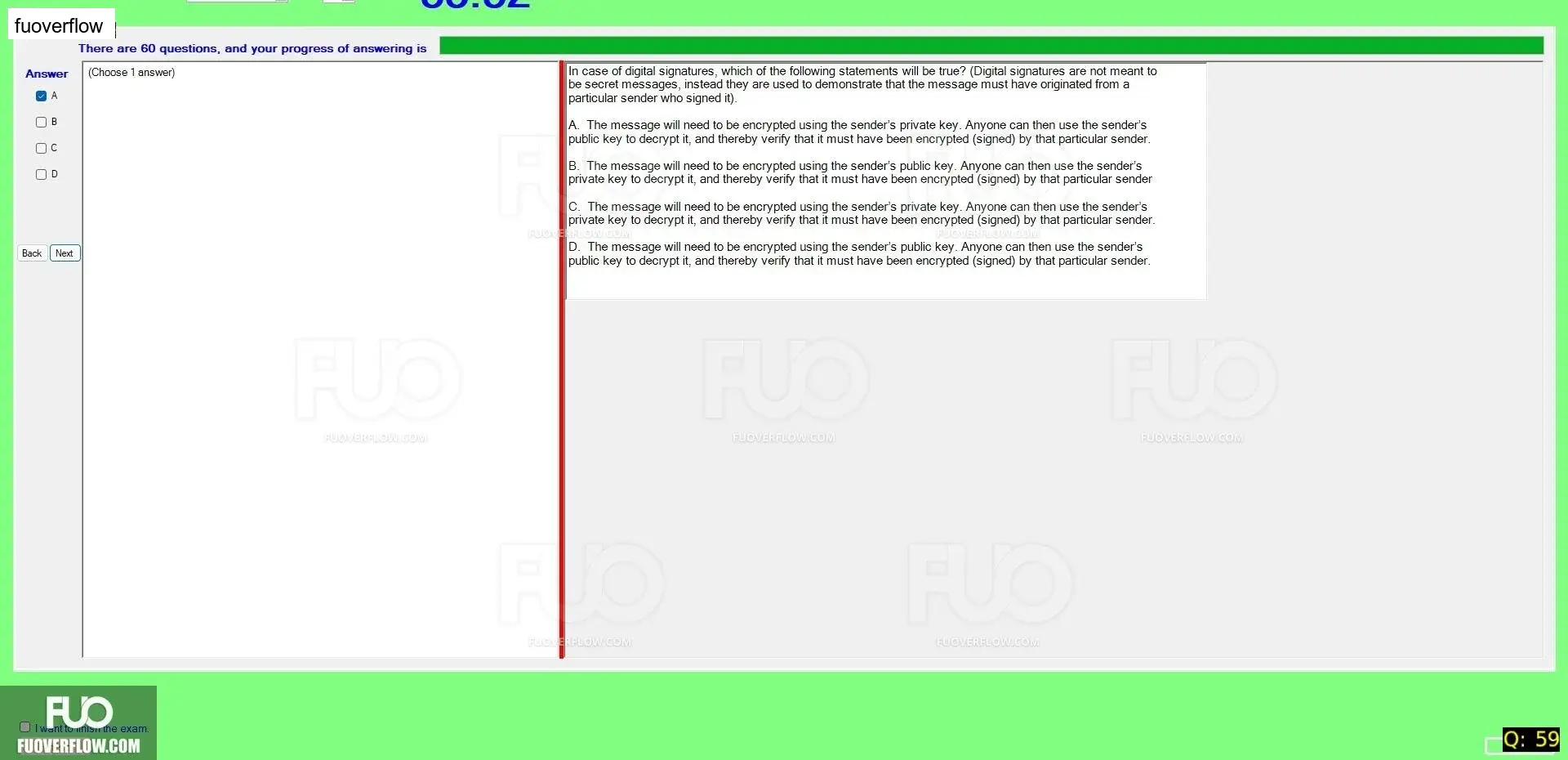
In case of digital signatures, which of the following statements will be true? (Digital signatures are not meant to be secret messages, instead they are used to demonstrate that the message must have originated from a particular sender who signed it).
A. The message will need to be encrypted using the sender's private key. Anyone can then use the sender's public key to decrypt it, and thereby verify that it must have been encrypted (signed) by that particular sender.
B. The message will need to be encrypted using the sender's public key. Anyone can then use the sender's private key to decrypt it, and thereby verify that it must have been encrypted (signed) by that particular sender
C. The message will need to be encrypted using the sender's private key. Anyone can then use the sender's private key to decrypt it, and thereby verify that it must have been encrypted (signed) by that particular sender.
D. The message will need to be encrypted using the sender's public key. Anyone can then use the sender's public key to decrypt it, and thereby verify that it must have been encrypted (signed) by that particular sender.
Q: 59