Reading
Questions
1
234
5
Reading 1/2:
OD
are appropriate?
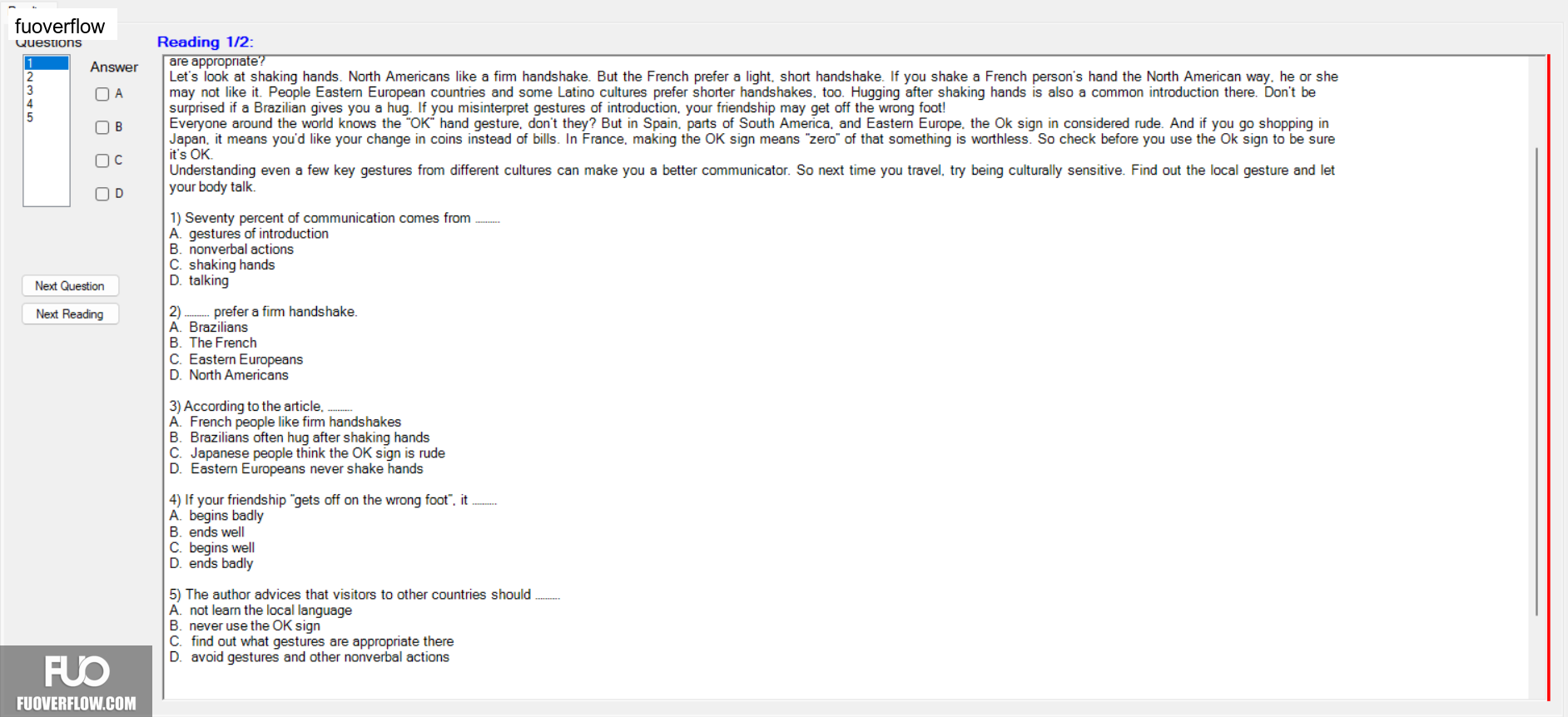
Let's look at shaking hands. North Americans like a firm handshake. But the French prefer a light, short handshake. If you shake a French person's hand the North American way, he or she
may not like it. People Eastern European countries and some Latino cultures prefer shorter handshakes, too. Hugging after shaking hands is also a common introduction there. Don't be
surprised if a Brazilian gives you a hug. If you misinterpret gestures of introduction, your friendship may get off the wrong foot!
Everyone around the world knows the "OK" hand gesture, don't they? But in Spain, parts of South America, and Eastern Europe, the Ok sign in considered rude. And if you go shopping in Japan, it means you'd like your change in coins instead of bills. In France, making the OK sign means "zero" of that something is worthless. So check before you use the Ok sign to be sure it's OK.
Understanding even a few key gestures from different cultures can make you a better communicator. So next time you travel, try being culturally sensitive. Find out the local gesture and let your body talk.
1) Seventy percent of communication comes from
A. gestures of introduction
B. nonverbal actions
Next Question
Next Reading
C. shaking hands
D. talking
2) prefer a firm handshake.
A. Brazilians
B. The French
C. Eastern Europeans
D. North Americans
3) According to the article.
A. French people like firm handshakes
B. Brazilians often hug after shaking hands C. Japanese people think the OK sign is rude
D. Eastern Europeans never shake hands
4) If your friendship "gets off on the wrong foot", it
A. begins badly B. ends well
C. begins well
D. ends badly
5) The author advices that visitors to other countries should
A. not learn the local language B. never use the OK sign
C. find out what gestures are appropriate there
D. avoid gestures and other nonverbal actions