1
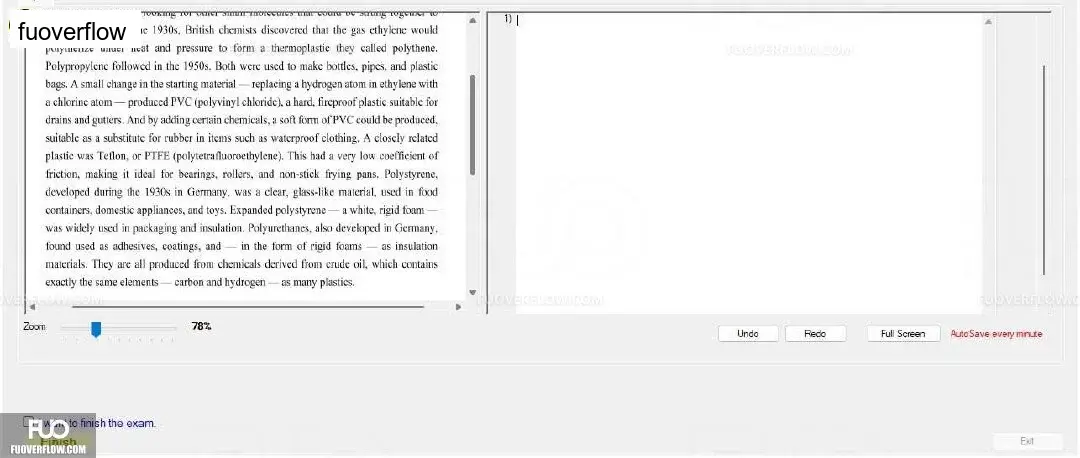
воен спептот vegan looking on recones cours deung rogu make polymers. In the 1930s, British chemists discovered that the gas ethylene would polymerize under heat and pressure to form a thermoplastic they called polythene.Polypropylene followed in the 1950s. Both were used to make bottles, pipes, and plastic bags. A small change in the starting material replacing a hydrogen atom in ethylene with a chlorine atom-produced PVC (polyvinyl chloride), a hard, fireproof plastic suitable for drains and gutters. And by adding certain chemicals, a soft form of PVC could be produced,suitable as a substitute for rubber in items such as waterproof clothing. A closely related plastic was Teflon, or PTFE (polytetrafluoroethylene). This had a very low coefficient of friction, making it ideal for bearings, rollers, and non-stick frying pans. Polystyrene,developed during the 1930s in Germany, was a clear, glass-like material, used in food containers, domestic appliances, and toys. Expanded polystyrene a white, rigid foam was widely used in packaging and insulation. Polyurethanes, also developed in Germany,found used as adhesives, coatings, and in the form of rigid foams as insulation materials. They are all produced from chemicals derived from crude oil, which contains exactly the same elements carbon and hydrogenas many plastics.
Zoom
78%
Full Screen
Auto Save every mriute
1)|
Undo
Redo